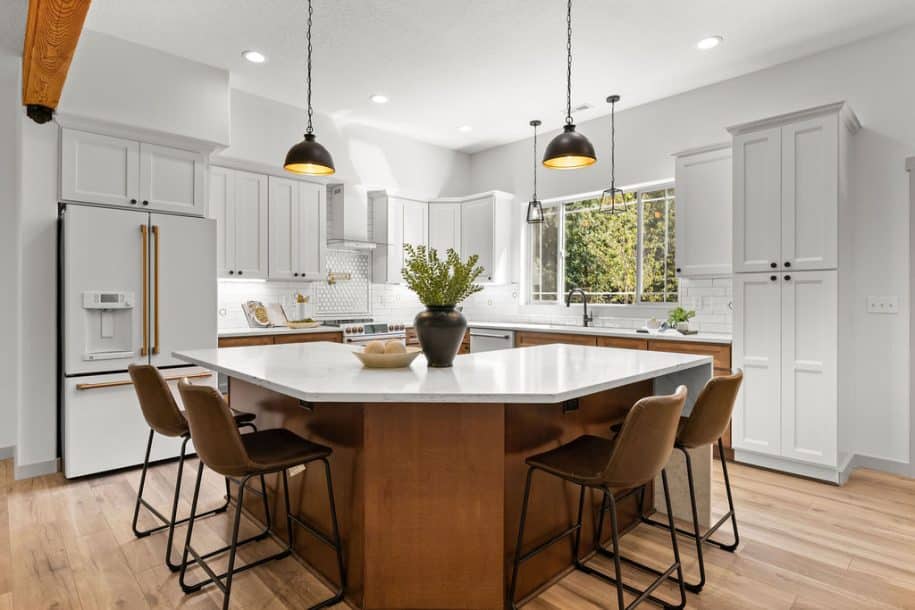
What Are the Best 5 Materials for Kitchen Countertops?
Choosing the right kitchen countertop is about more than style. It is about durability, maintenance, resale value, and how well the surface fits the way your household actually lives.
Your countertops are one of the most heavily used features in the kitchen. They handle meal prep, hot pans, spills, groceries, schoolwork, and everything in between. The wrong material can leave you dealing with stains, etching, or constant upkeep. The right material can make your kitchen easier to maintain, more beautiful to live in, and more appealing to future buyers.
When homeowners compare the best materials for kitchen countertops, five options usually rise to the top: quartz, granite, marble, butcher block, and quartzite. Each offers a different combination of performance, beauty, and maintenance. The best choice depends on your budget, your design goals, and how much wear and tear your kitchen sees every day.
Why Countertop Material Matters More Than Most Homeowners Think
Countertops are not just a finishing touch. They are one of the most functional investments in the entire kitchen. A surface may look stunning in a showroom, but if it cannot handle your real-life cooking habits, cleaning routine, or family traffic, it can quickly become a source of frustration.
The material you choose affects:
stain resistance
heat resistance
scratch resistance
food safety
ongoing maintenance
overall kitchen remodeling value
One of the biggest differences between countertop materials is whether they are porous or non-porous. Porous surfaces can absorb moisture, oil, and bacteria if not sealed properly. Non-porous surfaces resist absorption and tend to be easier to keep sanitary. That single characteristic can dramatically affect both maintenance and long-term performance.
Related: Choosing countertops is easier with a full kitchen plan. Start with our kitchen remodeling services and kitchen project inspiration.
The right countertop should match your lifestyle, not just your cabinets.
From durability and maintenance to heat resistance and resale value, the best countertop material is the one that performs well in your everyday kitchen—not just in a showroom.
1. Quartz: The Best All-Around Choice for Busy Kitchens
Quartz has become one of the most popular countertop materials for modern homes because it offers an excellent balance of beauty, performance, and low maintenance. Unlike natural stone, quartz is engineered from crushed quartz crystals combined with resins and pigments. That manufacturing process creates a durable and highly consistent surface.
For many homeowners, quartz is the easiest countertop material to live with. It resists stains, does not require sealing, and is available in a wide range of colors and patterns. It can mimic natural stone while offering a more predictable appearance and less maintenance.
Why quartz stands out
Quartz is non-porous, which means it does not absorb liquids or harbor bacteria the way porous materials can. Coffee, wine, juice, and food spills are much easier to clean up, making quartz a favorite for busy households and family kitchens.
Best advantages of quartz
non-porous and easy to clean
highly stain-resistant
no sealing required
available in many colors and designs
ideal for modern and low-maintenance kitchens
Potential downside
Quartz is highly durable, but it is not the best material for direct high heat. Because it contains resin, placing a very hot pot or pan on the surface can cause damage or discoloration. Trivets and hot pads are still a must.
Best for
Quartz is best for homeowners who want a stylish, low-maintenance countertop that performs well in a busy kitchen without extra upkeep.
2. Granite: A Natural Stone Classic with Proven Durability
Granite remains one of the most trusted countertop materials because it combines natural beauty with long-term strength. Every slab is different, which gives granite a more organic and exclusive appearance than engineered materials.
For homeowners who want real natural stone and do not mind occasional maintenance, granite continues to be one of the best investments in kitchen remodeling.
Why granite remains so popular
Granite is naturally hard, heat-resistant, and highly durable. It performs especially well in kitchens where cooking is frequent and hot cookware is common. Many homeowners also love the visual movement and uniqueness that granite brings to the space.
Best advantages of granite
natural beauty with one-of-a-kind patterns
excellent heat resistance
strong scratch resistance
long-lasting performance
high-end appearance with timeless appeal
Potential downside
Granite is porous, so it should be sealed periodically to help prevent staining. While the maintenance is manageable, it does require more attention than quartz.
Best for
Granite is best for homeowners who want the strength and beauty of natural stone with a more classic, timeless feel.
Excellent
Excellent
Excellent
Excellent
Excellent
3. Marble: Timeless Luxury with a Softer Side
Marble has long been associated with elegance, luxury, and classic kitchen design. Its natural veining and soft appearance give it a refined look that few materials can match. It is especially popular in high-end kitchens and among homeowners who want a bright, upscale finish.
At the same time, marble requires a different mindset than harder materials. It is not a countertop you choose because it is maintenance-free. It is a countertop you choose because you love its character and timeless beauty.
What makes marble special
Marble stays naturally cool, which makes it especially popular for baking and pastry preparation. It also develops a lived-in patina over time that many homeowners find appealing.
Best advantages of marble
luxurious and timeless appearance
elegant natural veining
naturally cool surface for baking
increases visual sophistication
ideal for classic and upscale kitchen designs
Potential downside
Marble is more prone to etching, scratching, and staining than quartz, granite, or quartzite. Acidic foods like lemon juice, vinegar, or tomato sauce can dull the finish if left on the surface.
Best for
Marble is best for homeowners who value luxury design, appreciate natural character, and are comfortable with a surface that will age visibly over time.
4. Butcher Block: Natural Warmth and Everyday Character
Butcher block brings something that stone countertops often cannot: warmth. Wood surfaces instantly make a kitchen feel more inviting, more comfortable, and more lived-in. They work especially well on kitchen islands, prep stations, and designs that lean toward farmhouse, traditional, or organic modern styles.
Butcher block is also one of the most repairable countertop materials available.
Why butcher block remains a favorite
Scratches, small dents, and signs of wear can often be sanded out and refinished. That makes butcher block a practical choice for homeowners who want a surface that can be refreshed instead of replaced.
Best advantages of butcher block
warm and inviting appearance
softer visual feel than stone
can be sanded and refinished
ideal for prep zones and islands
often more affordable than premium stone options
Potential downside
Wood requires regular care. It should be sealed or oiled consistently, and standing water can cause damage if the surface is not maintained properly.
Best for
Butcher block is best for homeowners who want warmth, texture, and a countertop surface with a more natural and relaxed feel.
5. Quartzite: The High-End Choice for Beauty and Strength
Quartzite is a premium natural stone that appeals to homeowners who want the elegant look of marble with better durability. It often features beautiful flowing veining and a luxurious appearance, but it is generally harder and more resistant to wear than marble.
Because of its appearance and strength, quartzite has become a top-tier option in upscale kitchen remodels.
What makes quartzite unique
Quartzite is a natural stone formed under intense heat and pressure, which makes it incredibly dense and durable. It often resembles marble visually, but it performs more like a harder working surface.
Best advantages of quartzite
premium natural stone appearance
stronger than marble in most kitchen applications
highly heat-resistant
strong scratch resistance
ideal for luxury remodels that need durability
Potential downside
Quartzite is usually more expensive to fabricate and install, and like other natural stones, it requires sealing to protect against stains.
Best for
Quartzite is best for homeowners who want a dramatic, high-end natural look without sacrificing as much durability as marble.
Best for Low Maintenance
Quartz offers the easiest long-term care with no sealing required and strong stain resistance.
Best for Heat Resistance
Granite handles hot cookware well and remains one of the most durable natural stone options.
Best for Luxury Appeal
Marble delivers timeless elegance and remains a favorite in upscale kitchen design.
Best for Warmth
Butcher Block creates a softer, more inviting kitchen feel with natural character.
Best for Premium Balance
Quartzite combines upscale natural beauty with stronger day-to-day durability.
Porous vs. Non-Porous Countertops: A Critical Difference
Not all countertop materials perform the same way below the surface. Some are porous, which means they can absorb liquids, oils, and bacteria if left unsealed or poorly maintained. Others are non-porous and naturally resist absorption.
This matters for both sanitation and maintenance.
Non-porous countertop option
Quartz is the standout in this category. It resists moisture penetration and does not require sealing.
Porous countertop options
Granite, marble, quartzite, and butcher block all require some degree of maintenance to help protect the surface from staining or moisture damage.
Homeowners who cook frequently, have children, or want the easiest maintenance routine often prefer non-porous surfaces for that reason alone.
What Do Kitchen Countertops Typically Cost?
Countertop pricing depends on more than just the slab material. Fabrication, cutouts, edging, thickness, delivery, and installation all affect the final price.
General installed price ranges
Entry-level:
$40 to $70 per square foot
Mid-range:
$70 to $100 per square foot
Premium:
$100 to $200+ per square foot
Quartz, granite, marble, butcher block, and quartzite can all fall into different price categories depending on quality, style, and region. Premium edge profiles, thicker slabs, and high-end patterns will increase the total cost.
Maintenance Reality: Which Countertop Is Easiest to Live With?
If you want the most convenient countertop material, quartz is typically the easiest option for everyday living. It does not need sealing and offers strong resistance to staining.
Granite and quartzite fall into the middle range. They are durable and attractive, but they do require periodic sealing.
Marble and butcher block usually demand more maintenance. Marble is more vulnerable to surface wear, while butcher block needs consistent sealing or oiling to stay protected.
The best countertop is not always the one that looks best on day one. It is the one you will still be happy with after years of real daily use.
How to Choose the Right Kitchen Countertop
The best kitchen countertop material depends on your priorities.
Choose quartz if:
You want low maintenance, easy cleaning, and modern versatility.
Choose granite if:
You want natural stone, strong durability, and excellent heat resistance.
Choose marble if:
You want timeless luxury and do not mind a countertop that develops patina.
Choose butcher block if:
You want warmth, natural character, and a softer, more welcoming kitchen design.
Choose quartzite if:
You want premium natural beauty with better performance than marble.
The best countertop is the one that fits your real life.
Style matters, but long-term performance matters more. The right countertop should complement your kitchen design, support the way your household functions, and continue delivering value for years to come.
Final Thoughts
The best 5 materials for kitchen countertops each bring something different to the table. Quartz offers low maintenance and easy cleanup. Granite delivers natural durability and heat resistance. Marble creates timeless visual luxury. Butcher block adds warmth and repairable character. Quartzite offers a premium balance of elegance and strength.
The right choice comes down to how you use your kitchen, how much maintenance you want to deal with, and what kind of long-term value you want from your remodel.
A beautiful countertop should do more than look impressive. It should support the way your kitchen functions every single day.