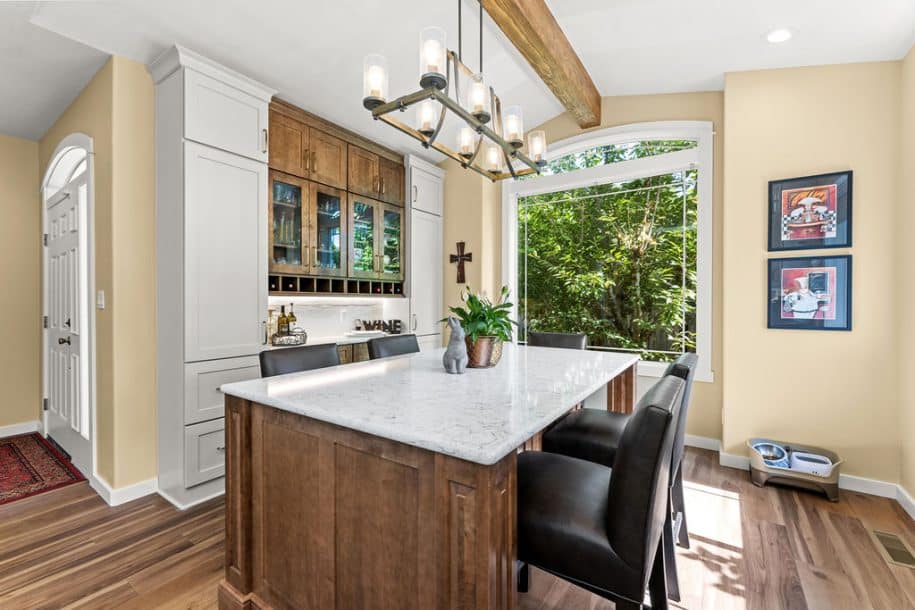
Choosing the Perfect Marble Countertop for Your Kitchen (Vancouver, WA)
It’s the centerpiece of countless dream kitchens: the stunning, elegant sweep of a marble countertop. With its cool, veined surface, nothing says timeless luxury quite like genuine marble—especially in a bright, open kitchen common in Vancouver, Washington and across Clark County.
But once you start planning, a nagging question shows up: Is marble actually livable? You’ve probably heard it stains if you think about red wine and scratches if you blink too hard.
Instead of fear, this guide gives you a clear-eyed view of the pros—and the surprisingly manageable cons—so you can choose marble with confidence (and without babying your kitchen like it’s a museum exhibit).
The Honest Pros and Cons: What It’s Really Like to Live With Marble
Every natural material has its own rules, and marble is no different. If you understand two traits, you’ll understand marble:
Marble is porous. If it’s unsealed (or overdue for resealing), it can absorb liquids that cause stains.
Marble is relatively soft. Compared to granite and many engineered stones, it can pick up fine scratches and subtle marks from daily life.
Here’s the part marble lovers know: those traits aren’t only negatives. Over time, small marks blend into a soft, lived-in look called a patina. It’s the same “earned over time” character you see on antique European bistro tables. Many homeowners don’t see it as damage—they see it as personality.
And marble has a practical perk that bakers love in the Pacific Northwest: it stays naturally cool, which makes it fantastic for rolling dough and working pastry.
Etching vs. Staining: The Two Big “Blemishes” (And Why They’re Different)
When people worry about “ruining” marble, they usually mean one of two things. The trick is knowing which is which.
Etching (not a stain)
Etching is physical damage to the surface. When something acidic—like lemon juice, vinegar, or tomato sauce—touches marble, it reacts with the stone and leaves a dull, whitish mark (often like a faint watermark).
Good news: etching is mostly about quick cleanups and smart habits, not specialty miracle products.
Staining (what sealers help prevent)
A stain happens when a colored liquid (coffee, wine, berries, oils) soaks into the pores and leaves pigment behind.
A good sealer isn’t acid-proof, but it does buy you time. It creates a barrier that helps you wipe spills up before they sink in—super helpful for real-life kitchens in Vancouver, WA, where dinner parties and morning coffee are non-negotiable.
Your Marble Care Plan: Simple Sealing + Daily Cleaning
Once you understand etching vs. staining, marble care becomes refreshingly simple.
Daily cleaning
Use:
A pH-neutral stone cleaner, or
Mild dish soap + warm water
Avoid:
Vinegar
Windex/ammonia
Bleach sprays
Abrasive powders or scrub pads
Those cleaners can etch marble fast. (Yes, even if they “smell clean.”)
Sealing (your best stain defense)
Use a quality impregnating sealer. It soaks into the stone and helps block stains from within.
When should you reseal? Try the Water Test:
Put a small puddle of water on the counter for ~10 minutes
If it beads up, you’re good
If it darkens the stone, it’s time to reseal
Resealing is usually a quick DIY task you’ll do once or twice a year, depending on use and the specific stone. That small step is the quiet secret behind marble that looks amazing for years.
Choosing Your Finish: Polished vs. Honed (This Matters More Than People Think)
Your next choice is the finish:
Polished marble
Classic high-gloss “wow” look
Veining pops dramatically
Shows etch marks more easily because they contrast against the shine
Honed marble
Matte, velvety, modern feel
Hides etching better because the surface is already less reflective
Often needs more diligent sealing since pores can be slightly more open
If you want marble but you don’t want to stress over every little mark, honed is usually the calmer choice. Polished is gorgeous—but it’s honest. It will show the story.
Picking the Stone: Carrara and Other Popular Marbles
Once you choose a finish, you’ll pick the marble itself.
Carrara is a timeless (and often more budget-friendly) choice known for soft, feathery veining. It’s a common starting point for homeowners remodeling kitchens in Vancouver and Camas, because it delivers the marble look without always hitting the highest price tier.
More dramatic, rare patterns tend to cost more—because slabs are graded by appearance, rarity, and demand.
The Real Cost of Marble: What to Budget For
Marble pricing typically includes:
The slab itself
Fabrication (cutouts, edges, fit)
Installation
Most projects are priced per square foot. In general, you can expect a range around $60 to $200+ per sq ft, depending on the stone, thickness, finish, edge detail, and the complexity of your layout.
What usually increases cost:
Highly dramatic or rare veining
Waterfall edges
Multiple cutouts (farmhouse sink, cooktop, pop-up outlets)
Tight spaces or complex seams
Premium edge profiles
Tip for Clark County remodel budgeting: your quote can vary a lot based on fabrication details, not just the slab. When you compare estimates, make sure each one lists the same edge profile, thickness, and cutouts—otherwise it’s not apples-to-apples.
Is Marble Your Perfect Match? A Final Checklist
You can now walk into a showroom and see more than a pretty stone. You understand the living character of marble—and what it takes to keep it looking great.
Marble is a great fit if:
You see patina as a feature, not a flaw
You’re fine with simple routine maintenance (sealing + smart cleaning)
You love natural stone and don’t need “perfect forever”
You might prefer an alternative if:
You want a zero-maintenance, predictable surface
The first scratch or etch would genuinely stress you out
You need maximum stain resistance with minimal upkeep
Ultimately, choosing marble—or choosing something else—is personal. However, now you can decide with confidence and budget realistically for a kitchen that fits your lifestyle in Vancouver, WA.
Related: Marble is only one part of a successful kitchen project. Compare it with other kitchen countertop materials or explore our kitchen remodeling services.
Leave a Reply
You must be logged in to post a comment.